The rural–urban divide
Why political distance grows when economic and lived realities remain invisible.
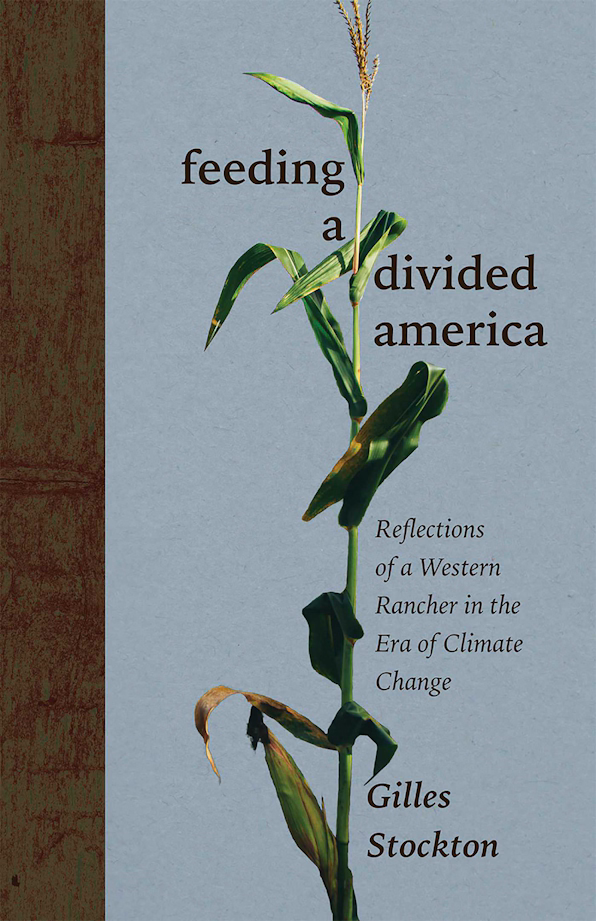
Feeding a Divided America · University of New Mexico Press
Writing from a lifetime in agriculture, Gilles Stockton examines the economic, environmental and political forces remaking rural America.
About the book
In Feeding a Divided America: Reflections of a Western Rancher in the Era of Climate Change, third-generation Montana rancher and international agriculture development specialist Gilles Stockton traces the causes of what he calls the rural-urban divide, and argues that the widening gap between rural America and its cities now threatens American democracy itself.
He shows how big banks, international food conglomerates, urban expectations and U.S. farm policy have all contributed to the decline of small towns across rural America. The essays take on market competition, trade policy, country-of-origin labeling, wildlife controversies, climate change, supply-chain disruptions, the worldwide decline of pastoralism and U.S. farm policy: issues that reach well beyond Montana.
Stockton stands with American farmers and ranchers and offers concrete remedies, while challenging urban and rural readers alike to find ways to coexist in a changing environment.
“Whether we eat may depend on it.”
Praise
“In this series of penetrating essays on modern American agriculture…”
Morrow highlights the book’s account of how farmers and ranchers struggle to make a living when a handful of giant companies control much of the food chain, and why rural and urban Americans talk past each other despite a shared interest in reforming national agricultural policy.
“Gilles Stockton takes a unique approach to storytelling.”
Meyers praises the way the book blends technical, cultural and political perspectives with personal experience drawn from Stockton’s life as a rancher, international agricultural-development specialist and conservationist.
Endorsements as published by the University of New Mexico Press.
Read an excerpt
Barn Raiser published an excerpt from the book, used by permission of the University of New Mexico Press. In it, Stockton traces how U.S. farm and antitrust policy since the 1970s, from the push to plant “fencerow to fencerow” for export to weakened merger oversight, handed control of agricultural inputs and markets to a few corporations, squeezing family farms while taxpayers absorbed the cost.
Read the excerpt at Barn Raiser ↗Inside the book
Editions
Publisher: University of New Mexico Press, Albuquerque.
Why political distance grows when economic and lived realities remain invisible.
How consolidation changes prices, bargaining power and the future of independent production.
What adaptation looks like from a working ranch, and why simple answers so often fail.
Practical paths toward coexistence, resilience and a healthier democratic food system.
In the media
A feature profile, also carried by the Helena Independent Record, Bozeman Daily Chronicle and Ravalli Republic, praising the book as accessible to general readers yet substantial enough to anchor a university course.
Ambrook Research · OffrangeMontana Rancher, Divided CountryA long-form profile describing the book as a battle cry for transparency in agriculture, rooted in decades of grassroots advocacy.
Heritage Radio Network · Farm to Table TalkFeeding a Divided CountryPodcast interview on the problems and solutions Stockton lays out in the book.
Down to Earth: The Planet to Plate PodcastFeeding a Divided AmericaPodcast conversation about how the U.S. agricultural system changed and how to return power to the people who grow food.
Barn RaiserThis Montana Rancher Has a Beef with Corporate Meat MonopoliesInterview on country-of-origin labeling and antitrust enforcement, two of the book’s central remedies.
More in Press & Public Record.
Published byReflections of a Western Rancher in the Era of Climate Change
Order the book
Read Gilles Stockton’s clear-eyed account of the forces dividing rural producers and urban consumers, and what it will take to rebuild a fair, resilient food system.
Buy direct from the publisherUniversity of New Mexico Press→Available in hardcover, paperback, eBook and audiobook from participating retailers.
Questions
It is a collection of essays by Montana rancher Gilles Stockton on the “rural-urban divide”: how the gap between rural producers and urban consumers shapes American politics, small towns and the food system. Stockton examines market competition, U.S. trade policy, country-of-origin labeling, wildlife controversies, climate change, supply-chain disruptions, the decline of pastoralism worldwide and U.S. farm policy, and he proposes remedies.
A third-generation Montana rancher who raises cattle and sheep near Grass Range, Montana, and has run the family ranch since 1975. He is also an international agricultural-development specialist with decades of work in the Horn of Africa and the Middle East, a member of the Northern Plains Resource Council, a past president of the Montana Cattlemen’s Association and a regular contributor to agricultural publications.
The University of New Mexico Press published the hardcover in May 2024. A paperback followed in 2025, and an unabridged audiobook from Tantor Media was released in May 2025. An eBook edition is also available.
Directly from the University of New Mexico Press, from independent bookstores through Bookshop.org, and from Amazon and Barnes & Noble. The book is available in hardcover, paperback, eBook and audiobook.
Yes. Barn Raiser published an excerpt, “Harvesting Destruction,” with permission from the University of New Mexico Press. It covers how U.S. farm and antitrust policy since the 1970s concentrated control of agriculture in a few corporations.
Among other remedies, Stockton argues for enforcing antitrust and fair-competition law in livestock markets, restoring mandatory country-of-origin labeling for beef, and building shared understanding between rural and urban Americans so both can push for farm policy that serves producers and consumers rather than consolidated corporations.
No. The essays are written for general readers, and they deliberately challenge urban and rural readers alike to understand how the food system works and how they can coexist in a changing environment.
Yes. Media, book clubs, classrooms and policy groups can reach him through the contact page.